Desert Modernism 101 - Richard Neutra's Grace Miller House
The Grace Miller House - Palm Springs’ hidden (and Incredibly historically Relevant…) gem
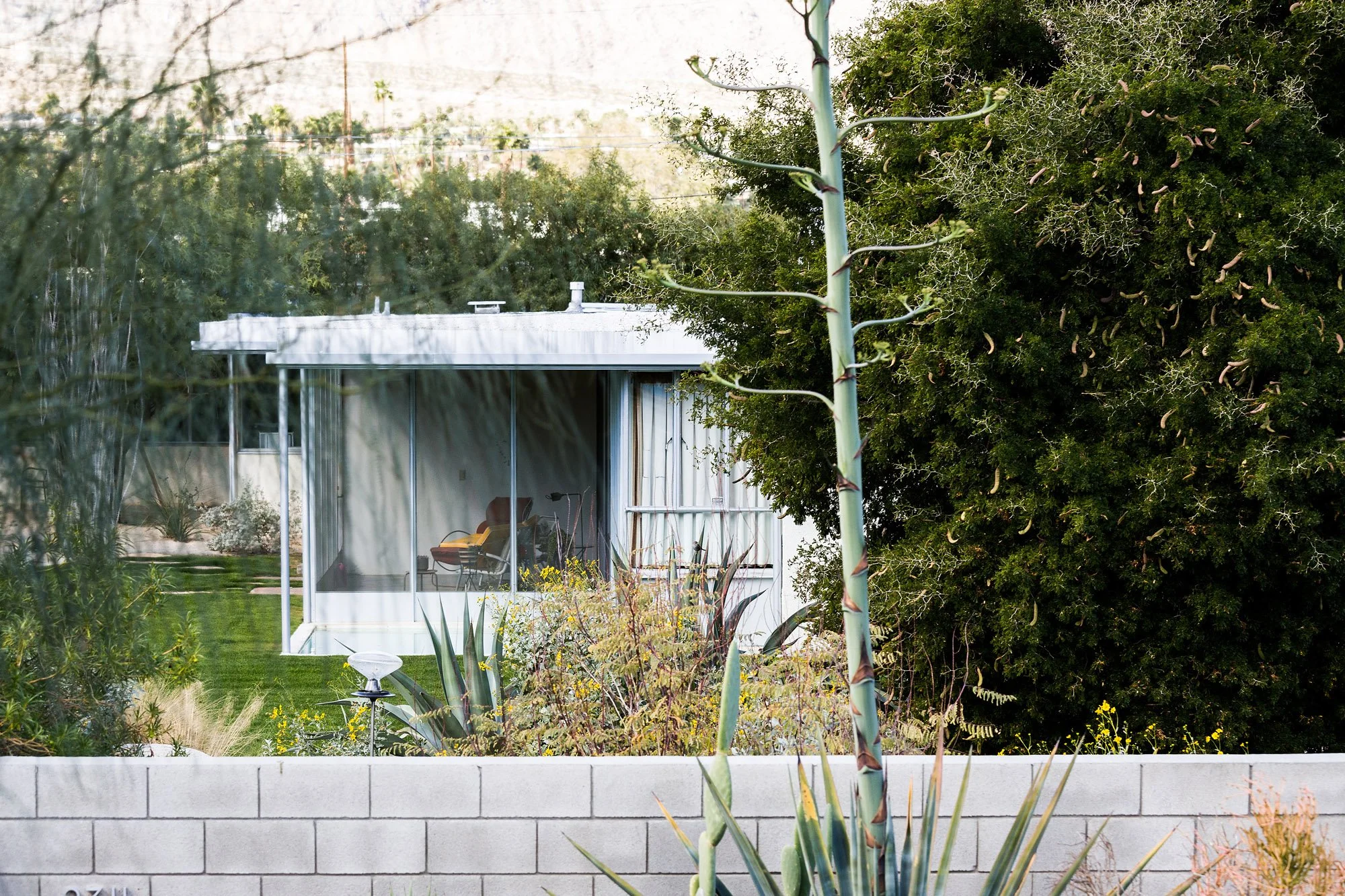
The Grace Miller house is one of those lynchpin historic homes that almost seems to exist only in theory. You can’t see it from the street, if you can even trust that the directions that you’ve found online are correct…hint, they aren’t. Tours seem to be non-existent. If it wasn’t for a segment in the absolutely wonderful 2008 documentary on the life of Julius Schulman, “Visual Acoustics,” (a must see for any fan of architecture BTW…) I wouldn’t have even been sure that it still existed! After a few years of shooting in Palm Springs, I’d yet to even catch a glimpse of it. But one day in 2019, an assignment appeared, and then there it was…Richard Neutra’s first commission in Palm Springs and a pioneering example of early Desert Modernism. As part of an ongoing project, I created most of the images below (the elevated photo from beyond the grounds being the only exception…) on medium format film equipment, specifically, a Pentax 6x7 and 105mm 2.4 lens with Kodak Portra 400 120 format film. There’s something about this specific combo that creates images straight out of 1950’s California, and the results feel perfectly matched to the timeless mid-century architecture of Palm Springs.
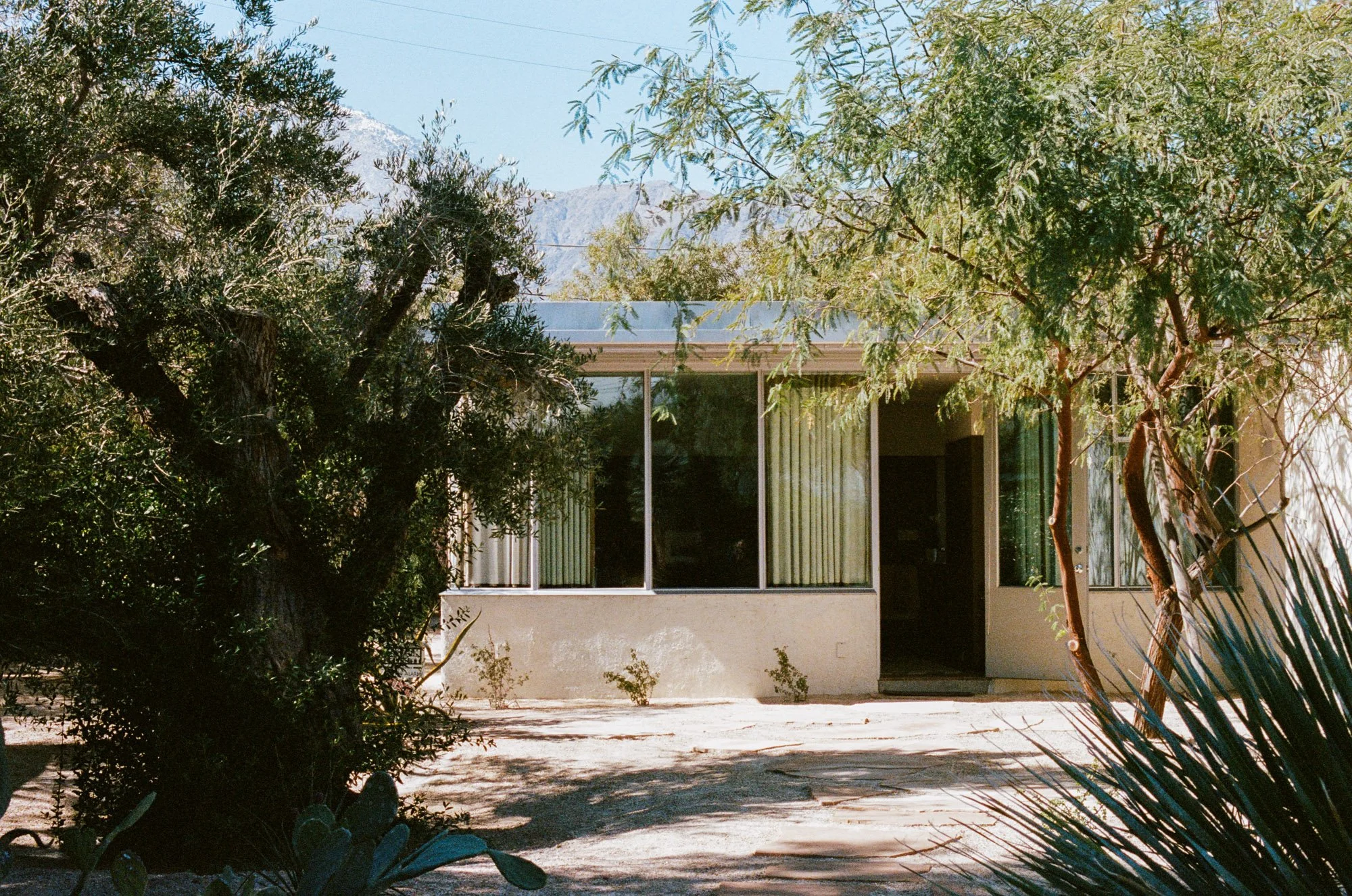
Photographed on Kodak Portra 400 with a Pentax 6x7
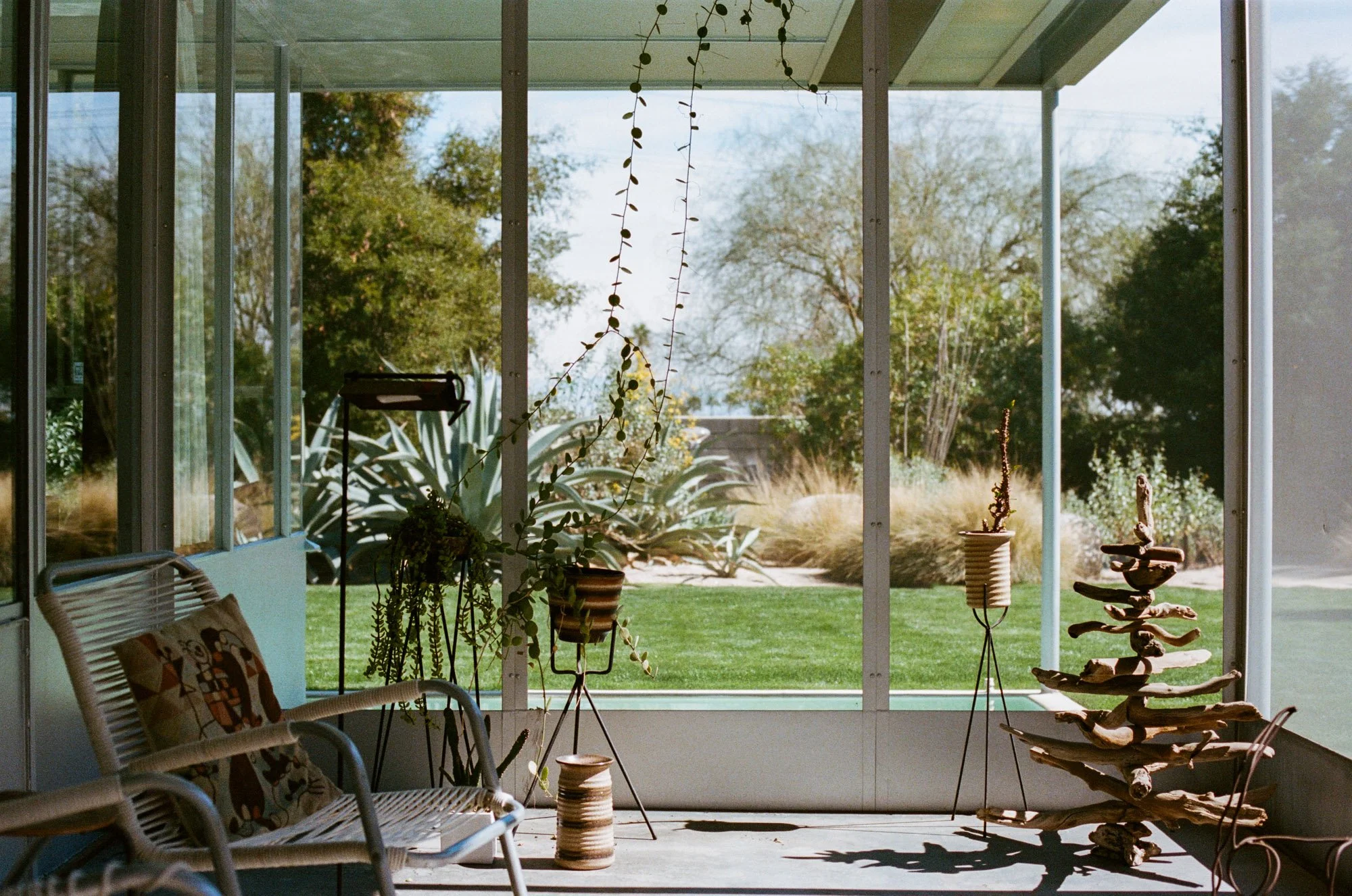
Photographed on Kodak Portra 400 with a Pentax 6x7
Designed by Neutra and completed in 1937, the home marks Neutra’s first commission in Palm Springs. Commissioned by Grace Lewis Miller, a St. Louis-based practitioner of the Mensendieck system of corrective posture and exercise, the modest single-story home served as both her winter residence and a private studio for teaching classes. With a tight budget, Neutra collaborated closely with Miller, reportedly exchanging 50 letters to tailor the design to her specific needs, lifestyle, and philosophy. The flat-roofed, stucco-clad structure features extensive glass walls and sliding doors for abundant natural light and cross-ventilation, north-facing window panels for even illumination without glare, and an open, flowing plan that integrates indoor spaces with the surrounding landscape of native vegetation and mountain views. Its most notable element is the screened porch, captured in the iconic black and white photo by Julius Schulman that features Grace herself relaxing in a chair, back when there was absolutely nothing else around the home but the calm expanse of the desert.
After years of neglect and use as a rental, the house fell into disrepair but was purchased in 2000 by a dedicated owner who undertook a meticulous restoration, preserving original features while sensitively adding a swimming pool and guest house in a manner compatible with Neutra’s vision. It has since earned historic status in Palm Springs, standing as an understated yet graceful testament to Neutra’s early desert experimentation before his more famous commissions like the Kaufmann House
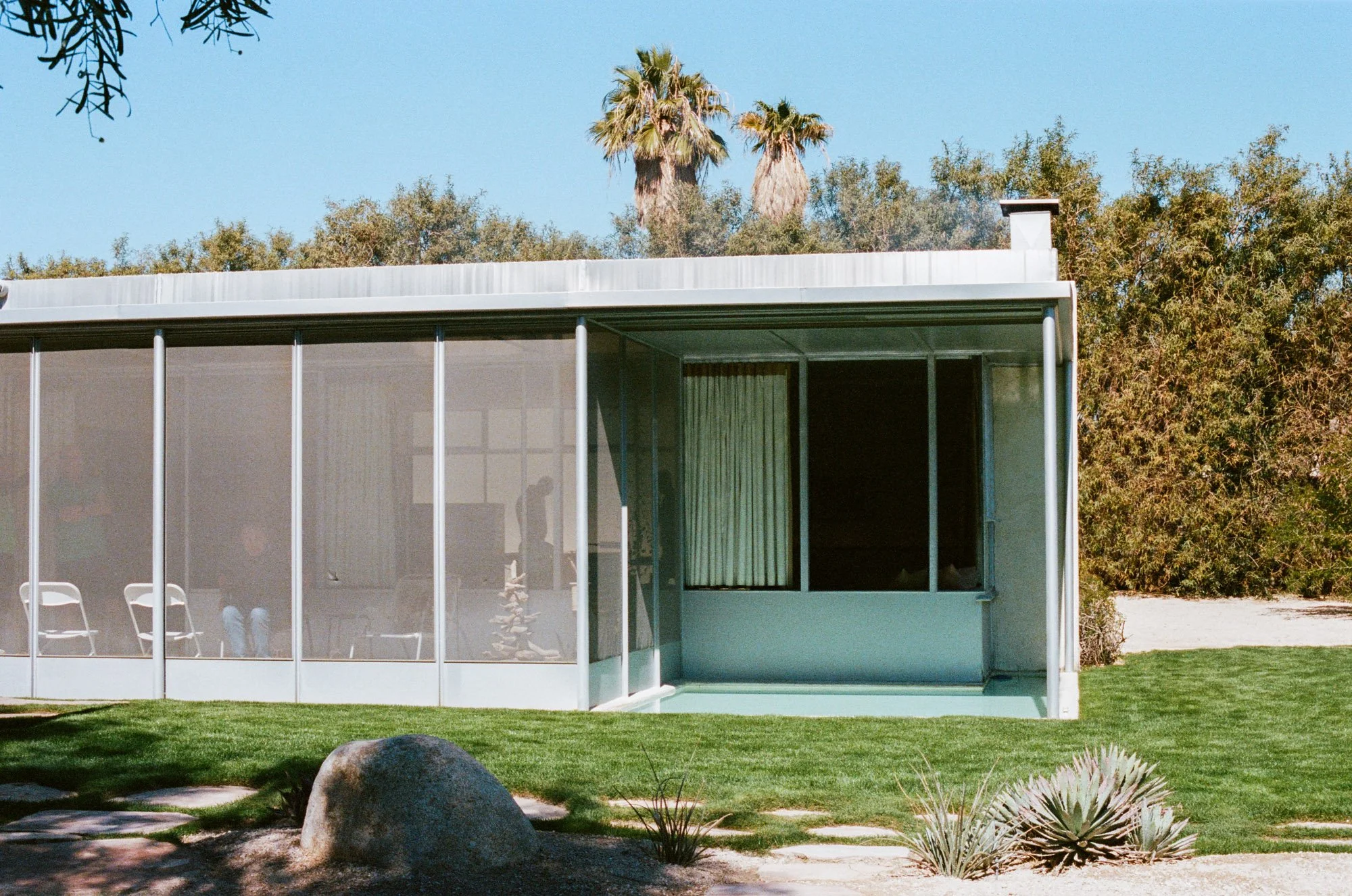
Photographed on Kodak Portra 400 with a Pentax 6x7
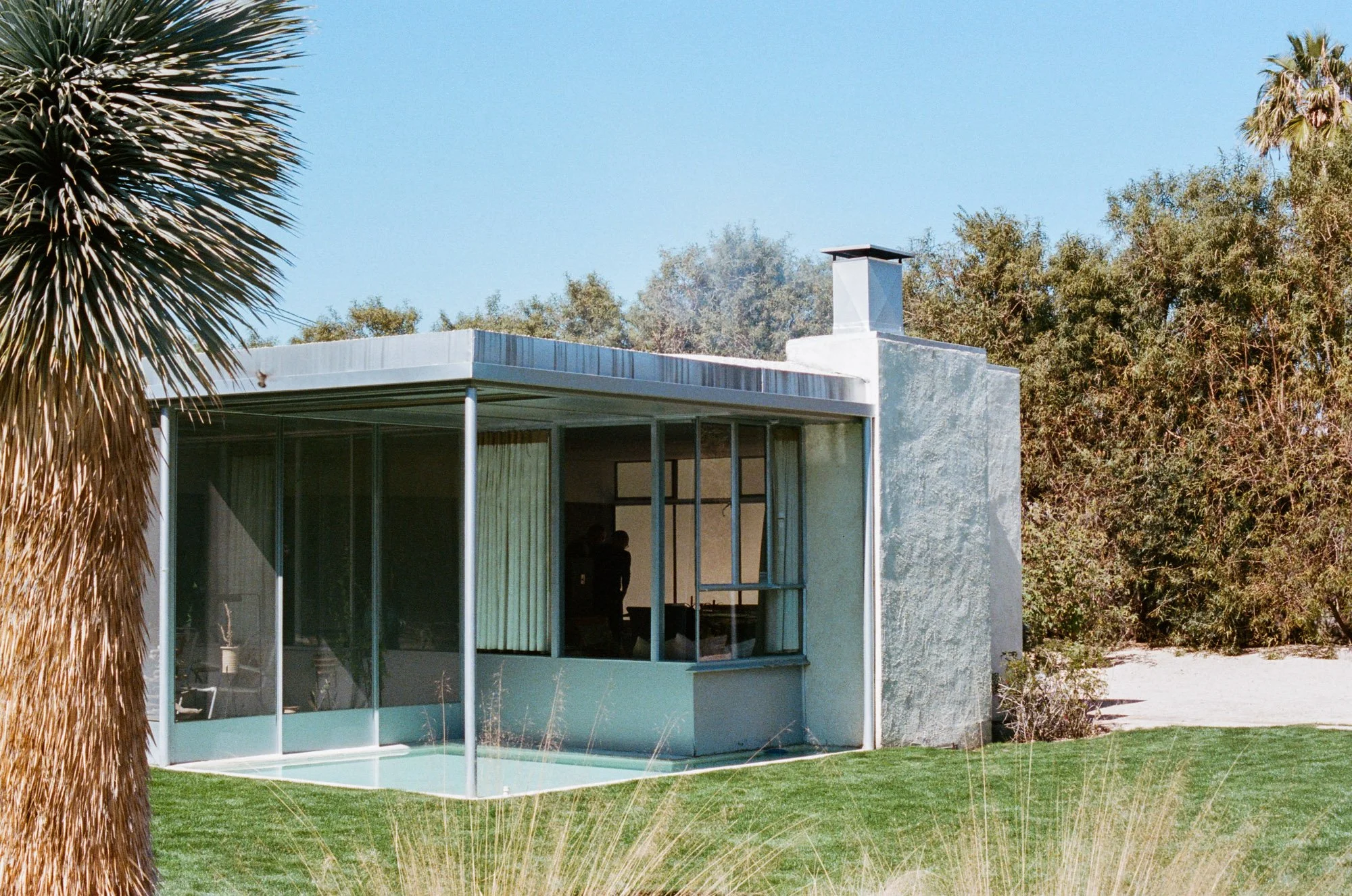
Photographed on Kodak Portra 400 with a Pentax 6x7
Richard Neutra (1892–1970) was an Austrian-born American architect whose work profoundly shaped mid-20th-century modernism, particularly in Southern California. Born in Vienna to a Jewish family, Neutra studied architecture at the Technical University of Vienna, influenced by mentors like Otto Wagner and Adolf Loos, and developed an early fascination with Frank Lloyd Wright’s Prairie style after seeing publications of his work. Emigrating to the United States in 1925 after brief work in Europe and a short stint with Wright at Taliesin, Neutra settled in Los Angeles. He pioneered the International Style in America with landmark projects like the Lovell Health House (1929), which integrated steel framing, large glass areas, and health-focused features, and later the iconic Kaufmann Desert House (1946) in Palm Springs. Neutra’s philosophy focused on responding to environmental conditions, maximizing natural light and ventilation, and fostering a sense of connection to the outdoors. His Palm Springs work, starting with the Grace Miller House, helped lay the foundation for Desert Modernism.