Desert Modernism 101 - Frank Sinatra's Twin Palms Estate
The Commission that launched the prolific career of E. Stewart Williams
While many architects contributed to the embarrassment of midcentury architectural riches that is Palm Springs, E. Stewart Williams stands out for his warm, humanistic approach that perfectly harmonized International Style modernism with the harsh desert environment. Without question, his most iconic residential commission was Frank Sinatra’s Twin Palms Estate, the 1947 masterpiece that became synonymous with Rat Pack-era luxury and Hollywood lore.
E. Stewart Williams
Williams was born into an architectural family - his father, Harry, was a respected architect who also worked in Palm Springs, designing Palm Springs’ historic La Plaza Shopping Center. He practiced in New York before moving to Palm Springs in 1946 where he quickly became a leading voice in desert modernism, blending the precision of modernism with natural materials like wood, stone, and glass to create light-filled spaces that embraced the vast landscape. His buildings emphasized privacy, indoor-outdoor flow, and a sense of warmth amid the arid surroundings.


Twin Palms: Williams’ Breakthrough and Sinatra’s Desert Playground
In the summer of 1947, a young Sinatra, fresh off early career success, walked into Williams’ office seeking a new home in Palm Springs. He initially envisioned a grand Georgian-style mansion, ready in time for a Christmas party later that year. Williams, horrified at the idea of imposing formal East Coast architecture on the desert, presented two schemes: the requested Georgian one and a sleek modernist alternative. Sinatra chose the modern design.
Completed that year, Twin Palms was Williams’ first major standalone residential commission. The 4,500-square-foot, four-bedroom, single-story home cost about $150,000 to build and served as Sinatra’s primary residence from 1948 until he sold it in 1957 (he later moved to a larger compound in Rancho Mirage).
Signature features include:
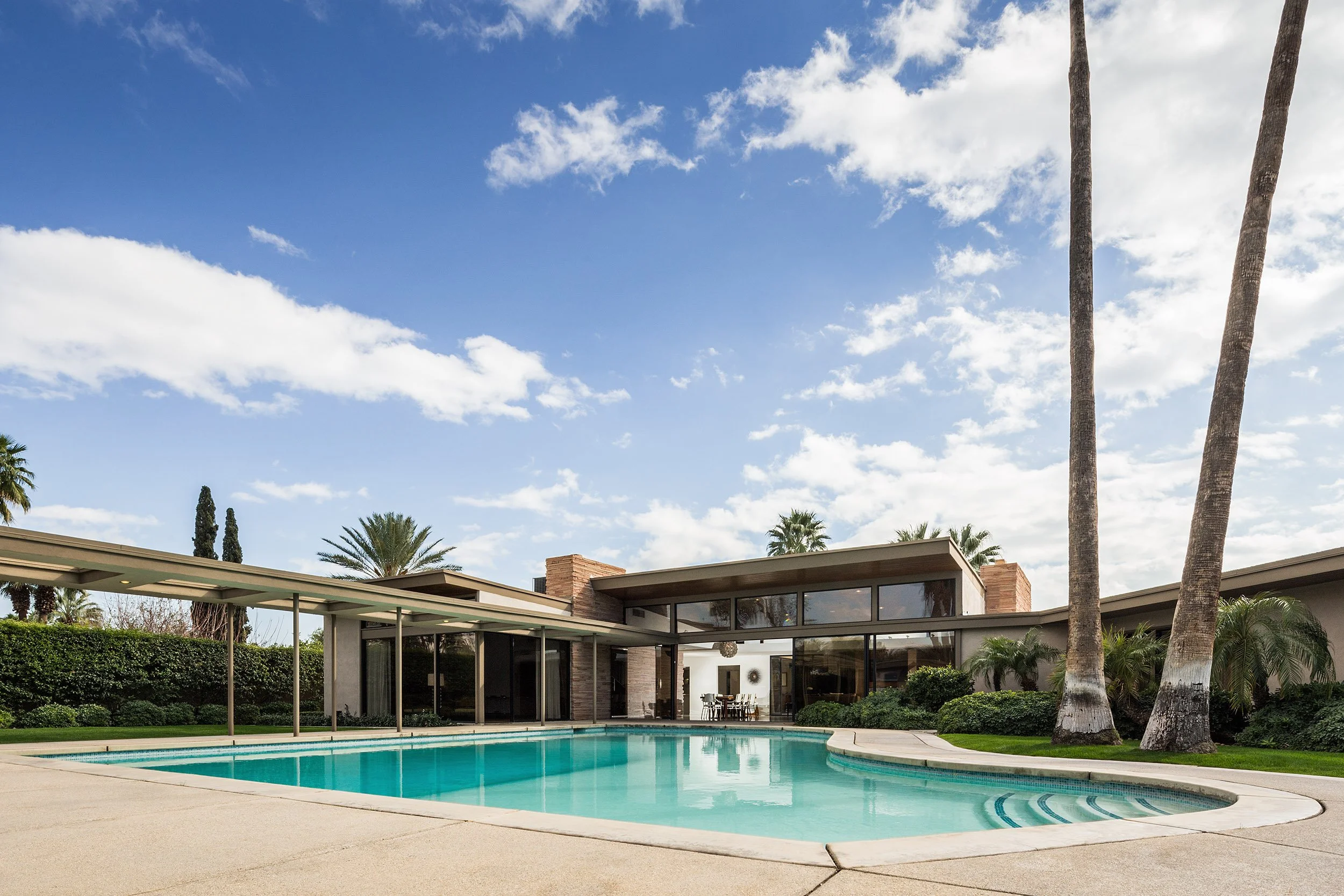
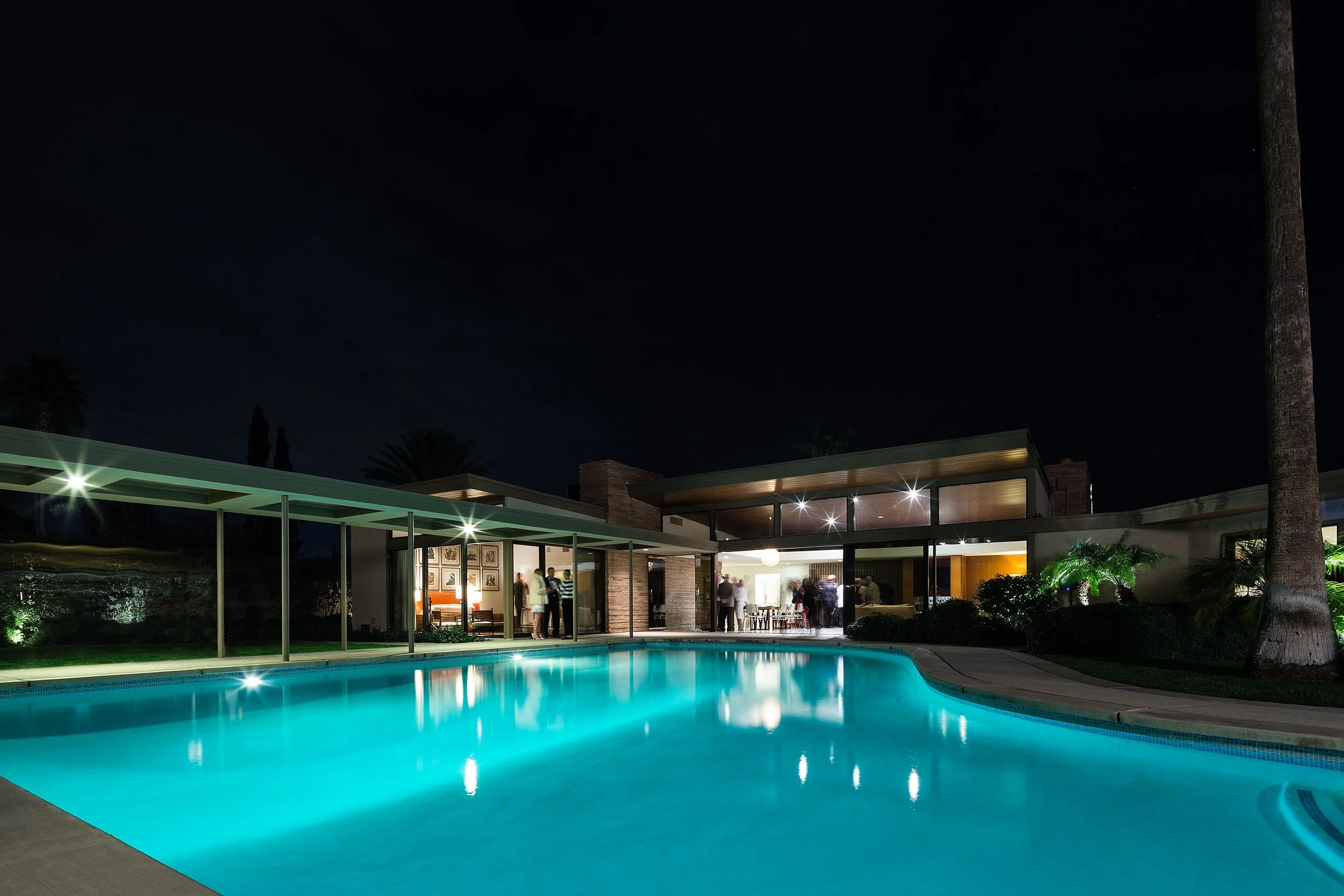
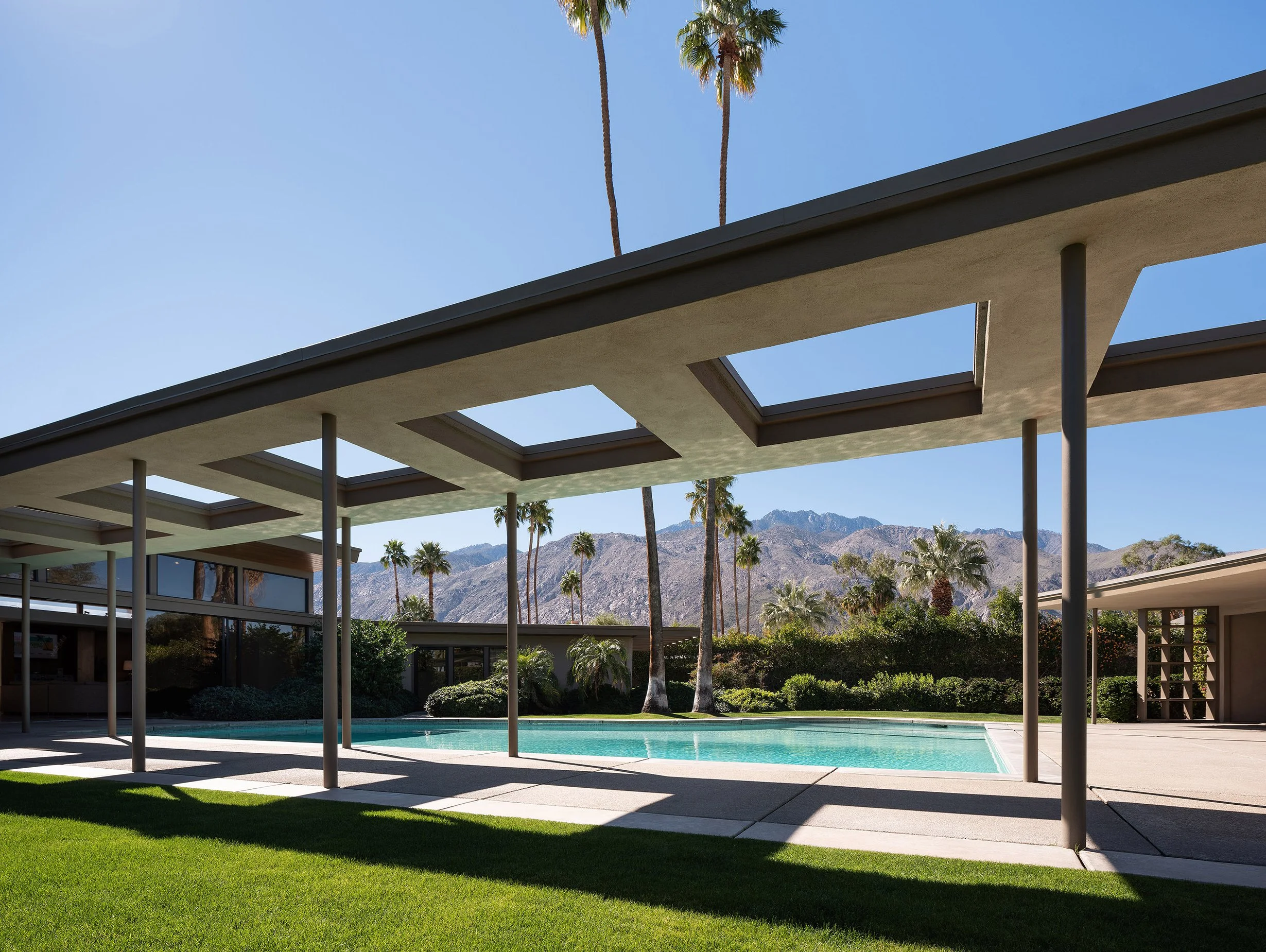
• Piano-shaped swimming pool: The most famous element, curving gracefully like a grand piano (though Williams insisted the shape was coincidental). It’s sheltered on three sides by the house, a pergola, and a cabana, creating an intimate oasis.
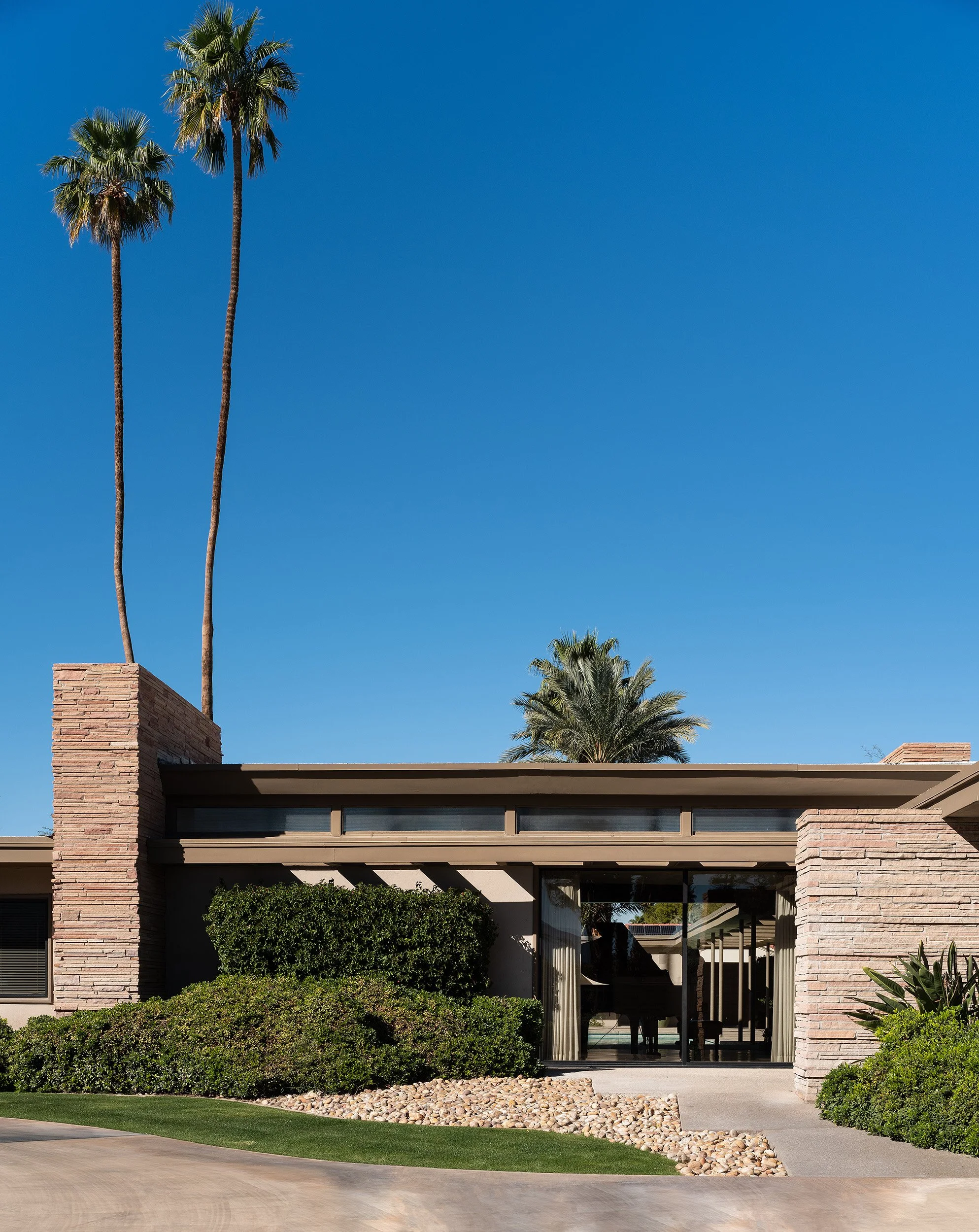
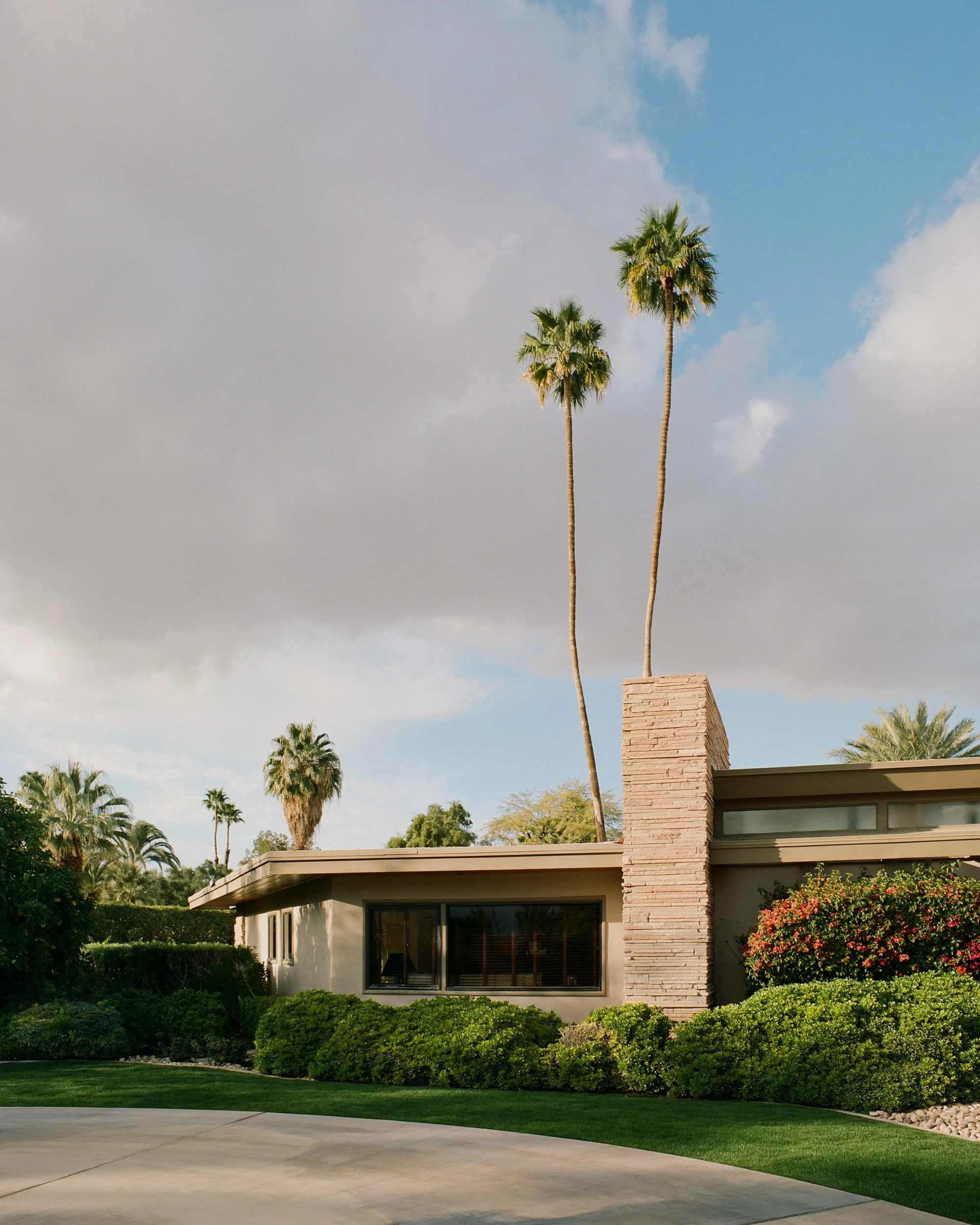
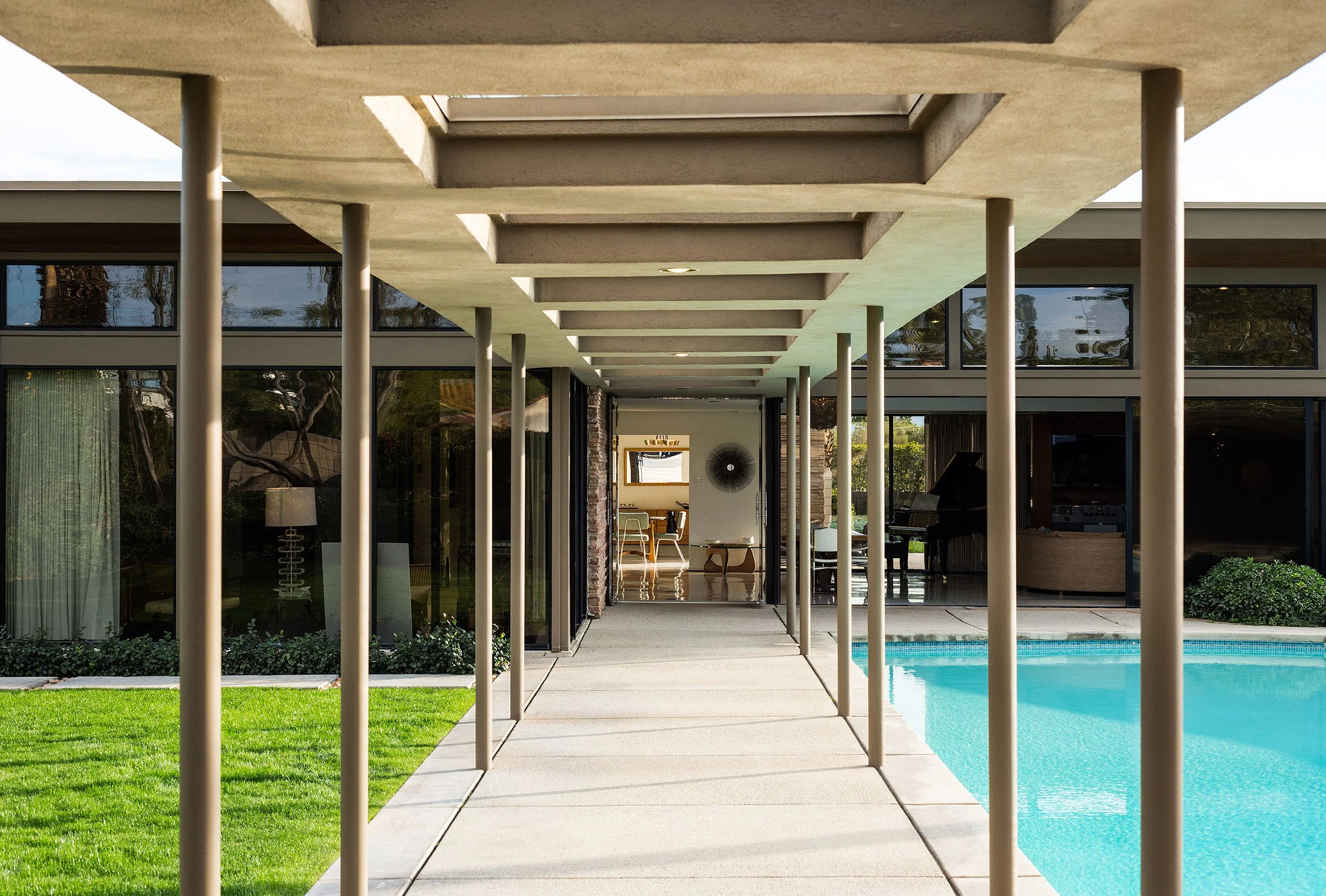
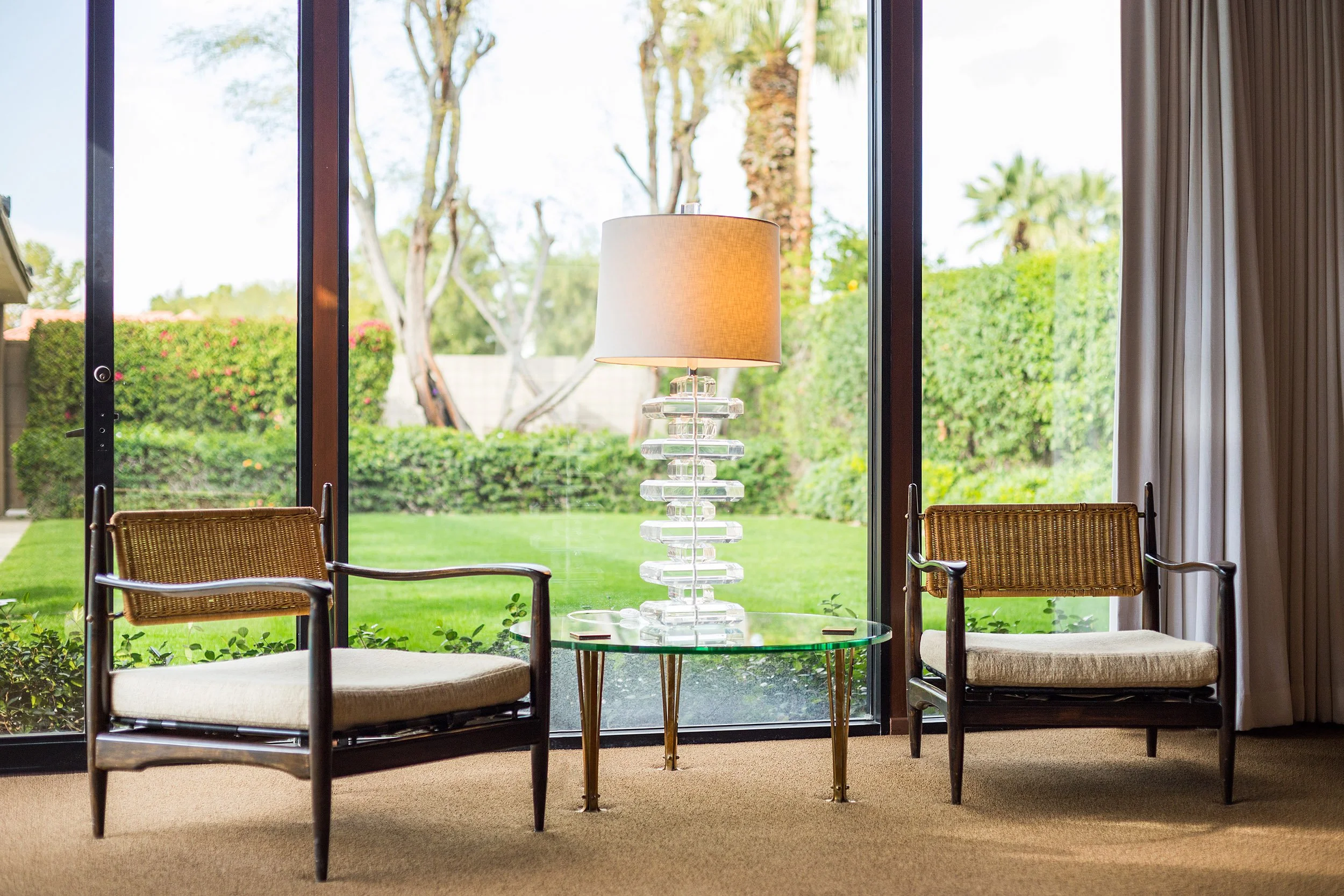
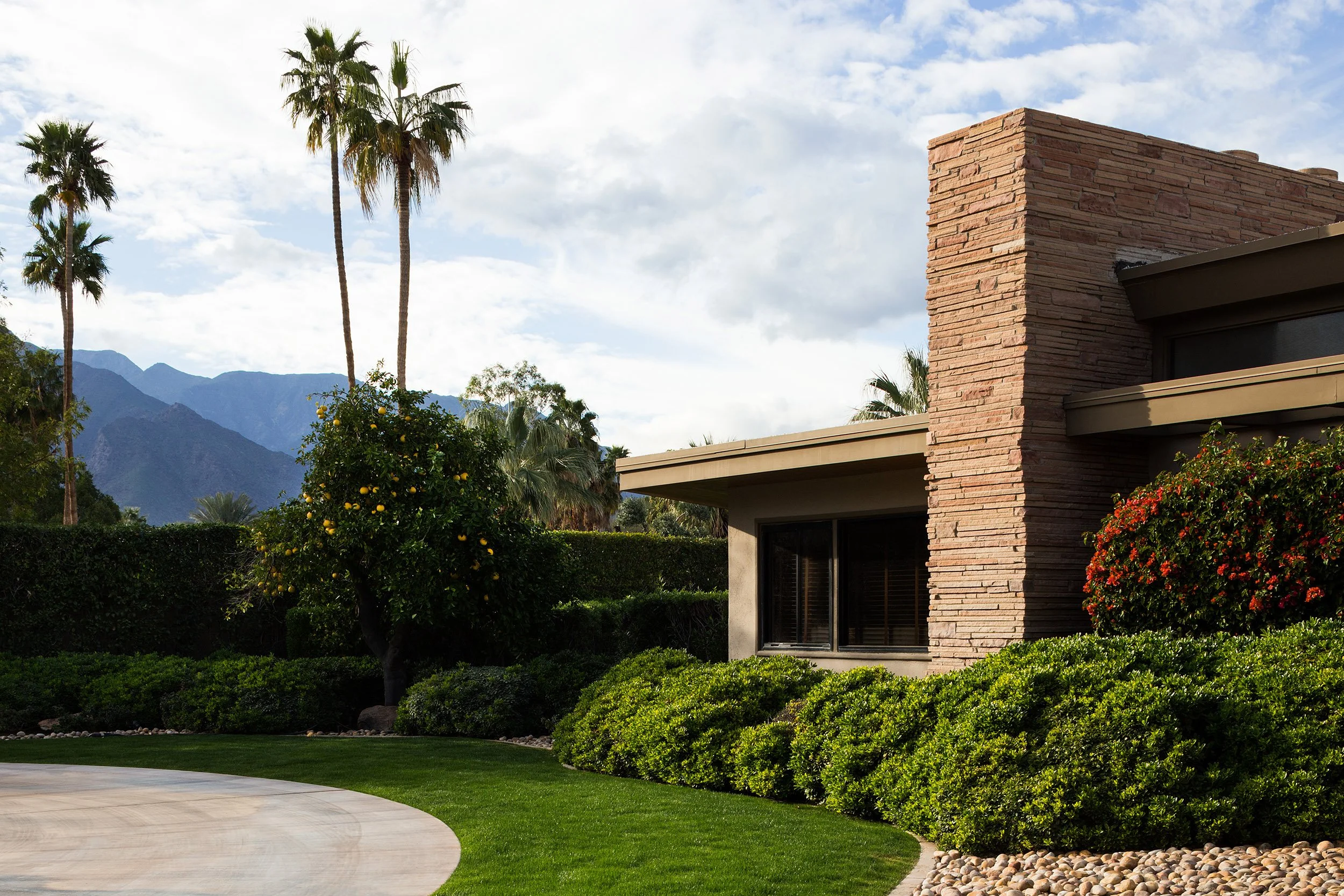
• Horizontal lines and glass: Low-slung profile with expansive floor-to-ceiling glass walls that blur indoors and outdoors, framing desert views and the iconic twin palm trees on the property.
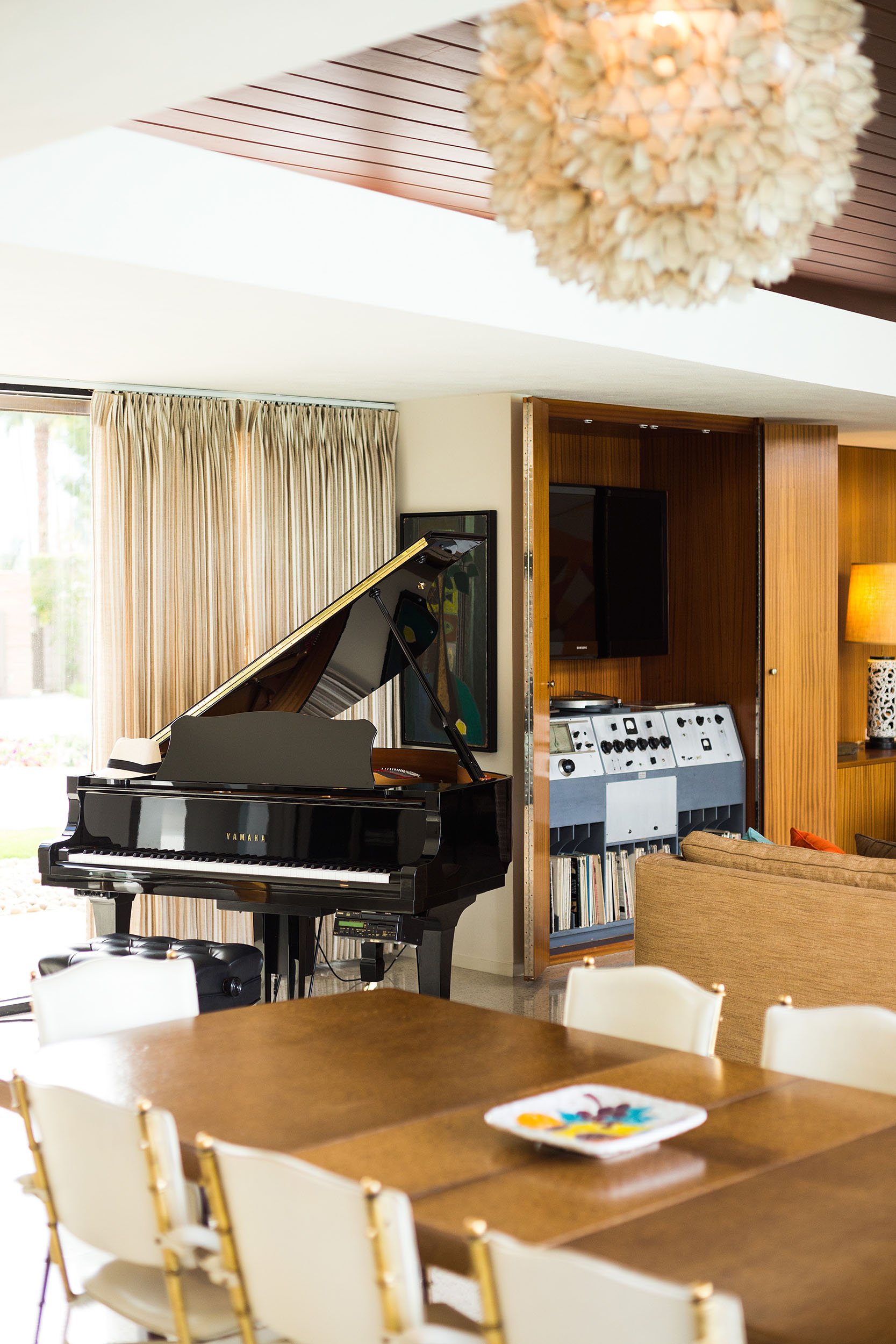
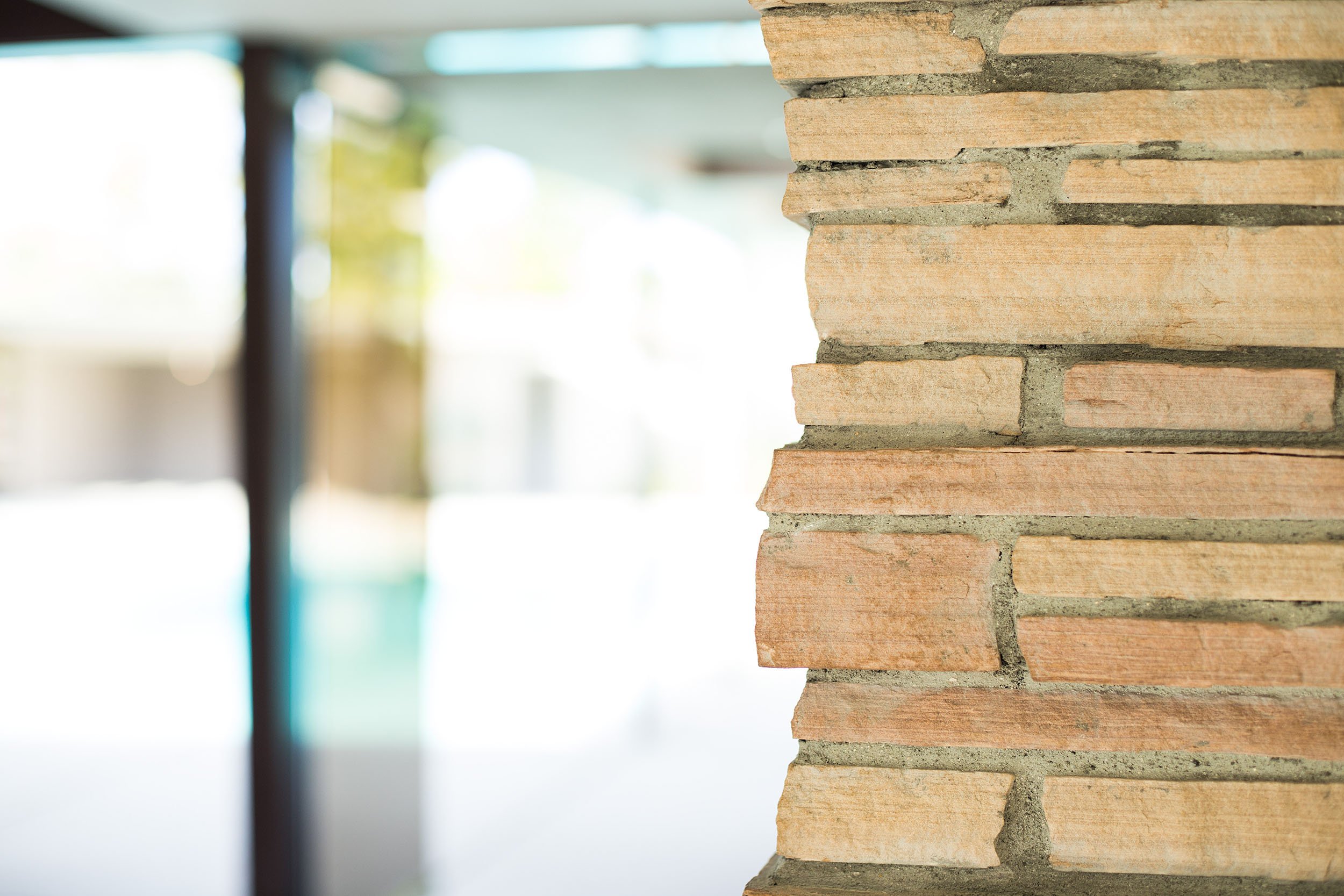
• Natural materials: Arizona flagstone chimneys, tongue-and-groove Douglas fir ceilings with soaring slopes, warm wood tones, and stone accents that add texture to the modernist framework.
• Open, flowing layout: Generous living spaces with a dramatic entry, bedrooms in a separate wing arranged for seclusion, and seamless transitions to patios and gardens.
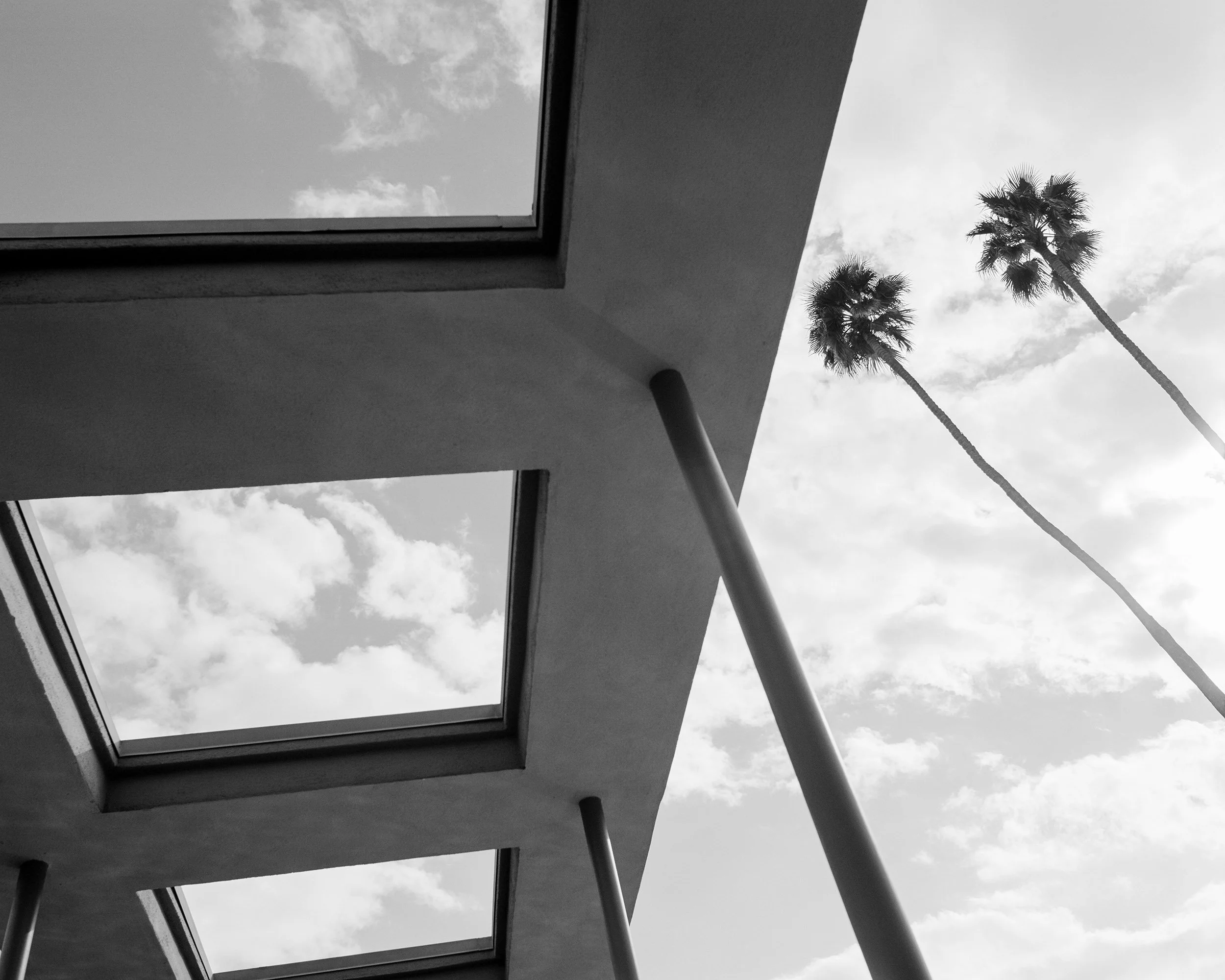
• Pergola and covered spaces: Extending living areas outdoors for year-round desert entertaining under shaded canopies.
The home perfectly captured the era’s optimism: glamorous yet livable.
Restoration & Historic Status
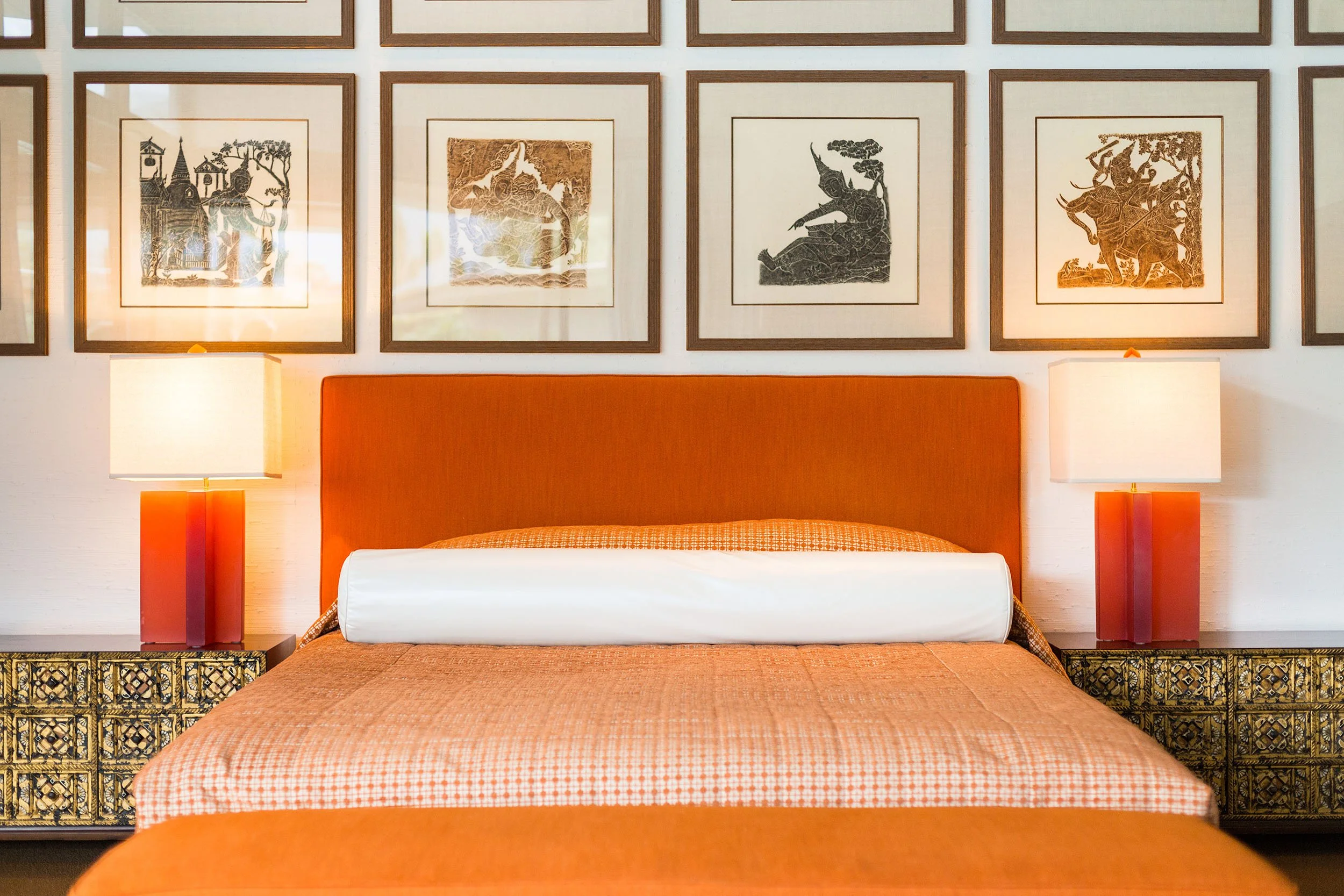
After Sinatra sold the property, it passed through multiple owners. In the early 2000s, a meticulous restoration returned it to its midcentury form while adding modern comforts. The entrance was reoriented (moving the front door away from the now-busy street), and sensitive updates preserved the original spirit.
In 2011, the City of Palm Springs designated Twin Palms a Class 1 Historic Site, the highest level of local protection, for its architectural significance and Hollywood connection.
Today, Twin Palms remains privately owned but is available for luxury vacation rentals, events, and occasional architectural tours, especially during Modernism Week, where Palm Springs Preservation Foundation tours are highly sought after.